
HollandGreen: How Landscape Design Strengthens Planning Applications
Owners, developers and advisors operating at the top end of the residential market are increasingly finding that planning outcomes are shaped as much by landscape strategy as by architecture itself. In sensitive rural, heritage and environmentally constrained settings, landscape design has become a critical tool in demonstrating visual restraint, ecological responsibility and long-term stewardship.
In this article, Mark Latchford, Director of Landscape Design at HollandGreen, explores how landscape-led thinking can strengthen planning applications, resolve complex sites and support approval on some of the UK’s most challenging super-prime projects.
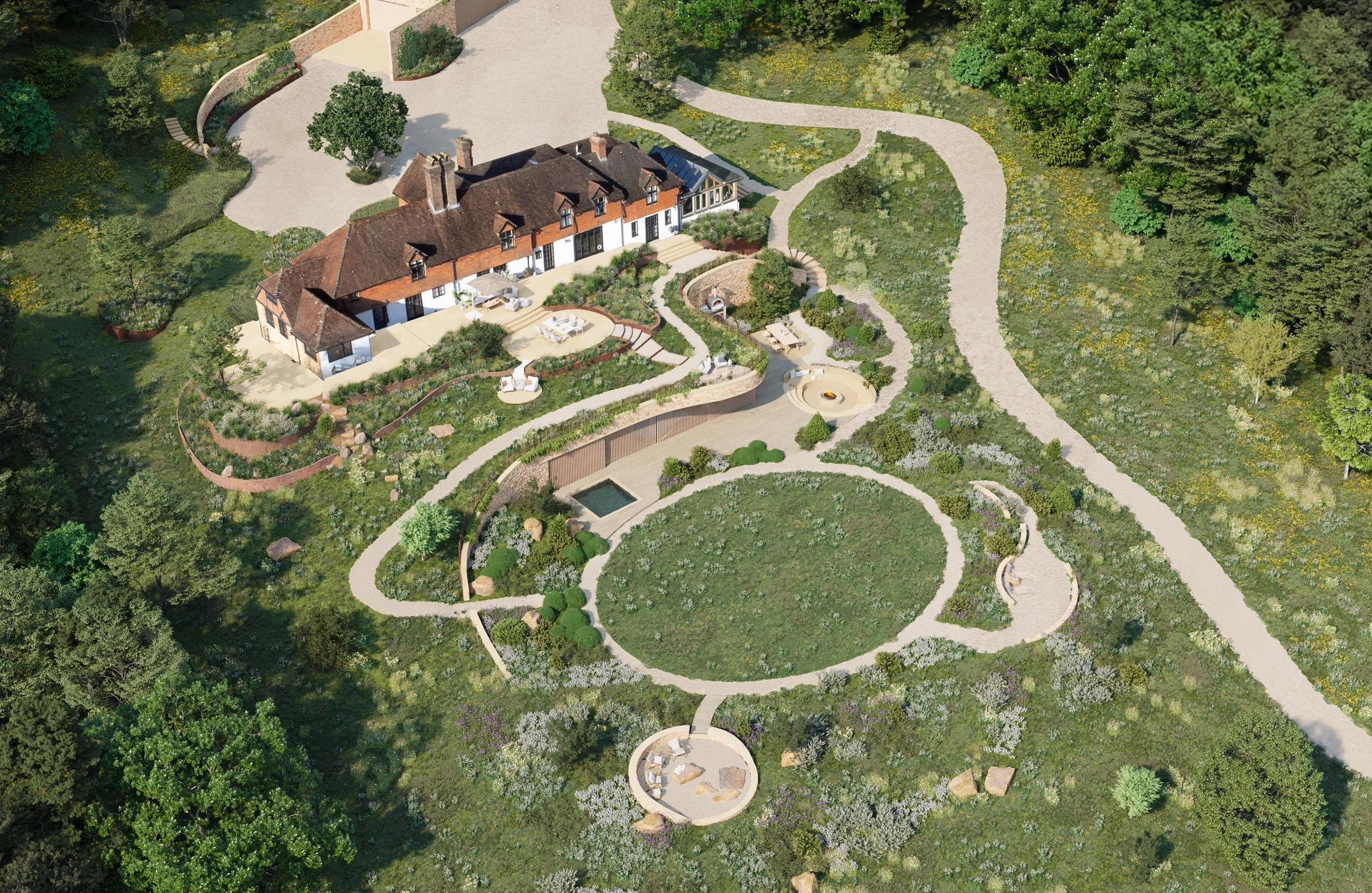
Image credit: HollandGreen
At HollandGreen, we create homes and gardens that feel intrinsically connected to their surroundings. Our integrated design practice brings architecture, interior design and landscape design together from the outset, with each discipline shaping the others as the design evolves. This way of working results in proposals that feel cohesive and carefully designed, with a natural response to both their context and the planning environment.
Engaging a landscape designer early in the process is not simply a matter of aesthetics. In rural settings, conservation areas, listed properties, and ecologically sensitive sites, the landscape is a defining component of the design. It shapes how a home sits within its environment, how it is perceived, and how it performs ecologically over time.
“When landscape informs the design from day one, every element from planting to structure contributes to a seamless, resilient outcome.”
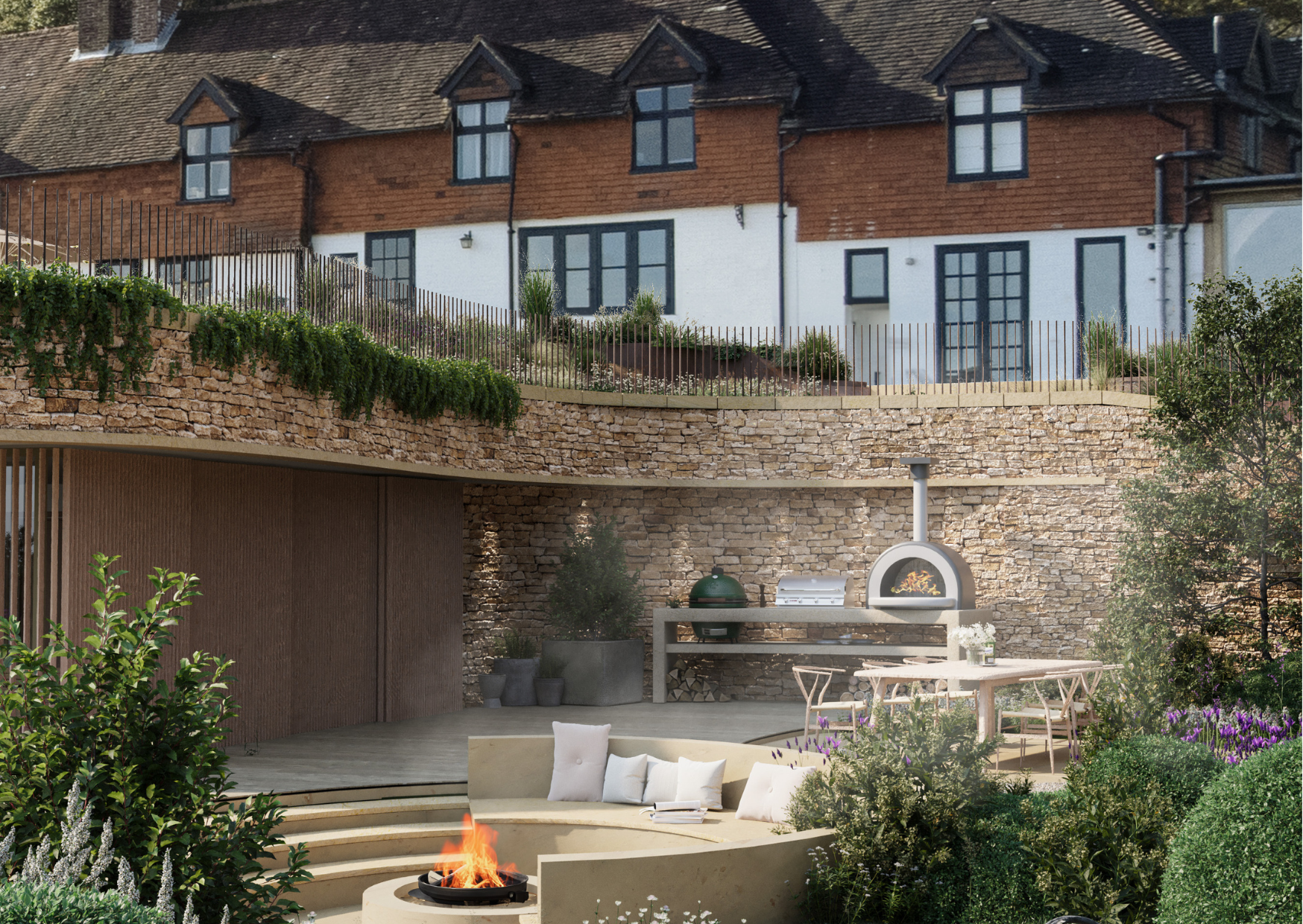
Image credit: HollandGreen
Understanding How Sites Are Evaluated
Planning authorities assess proposals through the lens of visual impact, ecological sensitivity, and how development interacts with the wider landscape. Landscape designers provide the technical evidence required to meet these criteria, including topography studies, habitat assessments, sightline analysis, and opportunities for enhancement.
At Hazelhurst House, landscape-led design was crucial in resolving a steeply sloping site. Terraces, meadow planting, and green roofs were carefully arranged to allow the architecture to sit naturally within the hillside. A subterranean spa, integrated into the terrain and topped with planting, reads as a continuation of the landscape rather than an intrusive intervention.
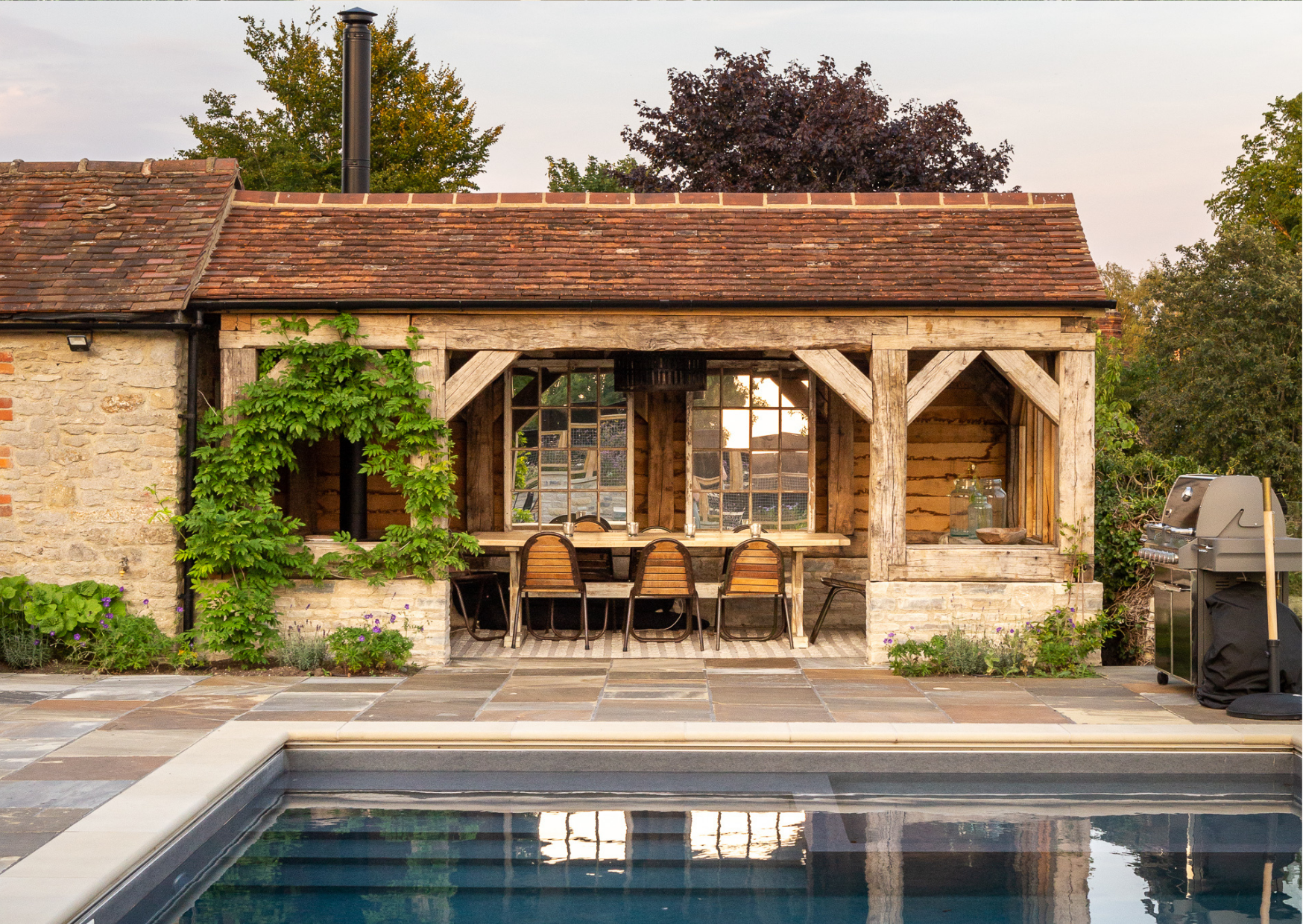
Image credit: HollandGreen
Integrating Landscape and Architecture
Landscape design can extend the usability and enjoyment of a home, strengthening the planning rationale. At Asher House, a luxury outdoor pool, sunken spa, and oak-framed pavilion were positioned to complement long-reaching views across sunlit fields.
Terraces, vibrant planting, and carefully considered spatial relationships connect structures seamlessly to their surroundings. The pavilion, complete with a wood burner and timber dining table, supports year-round outdoor living while remaining sympathetic to the heritage architecture and sensitive listed status.
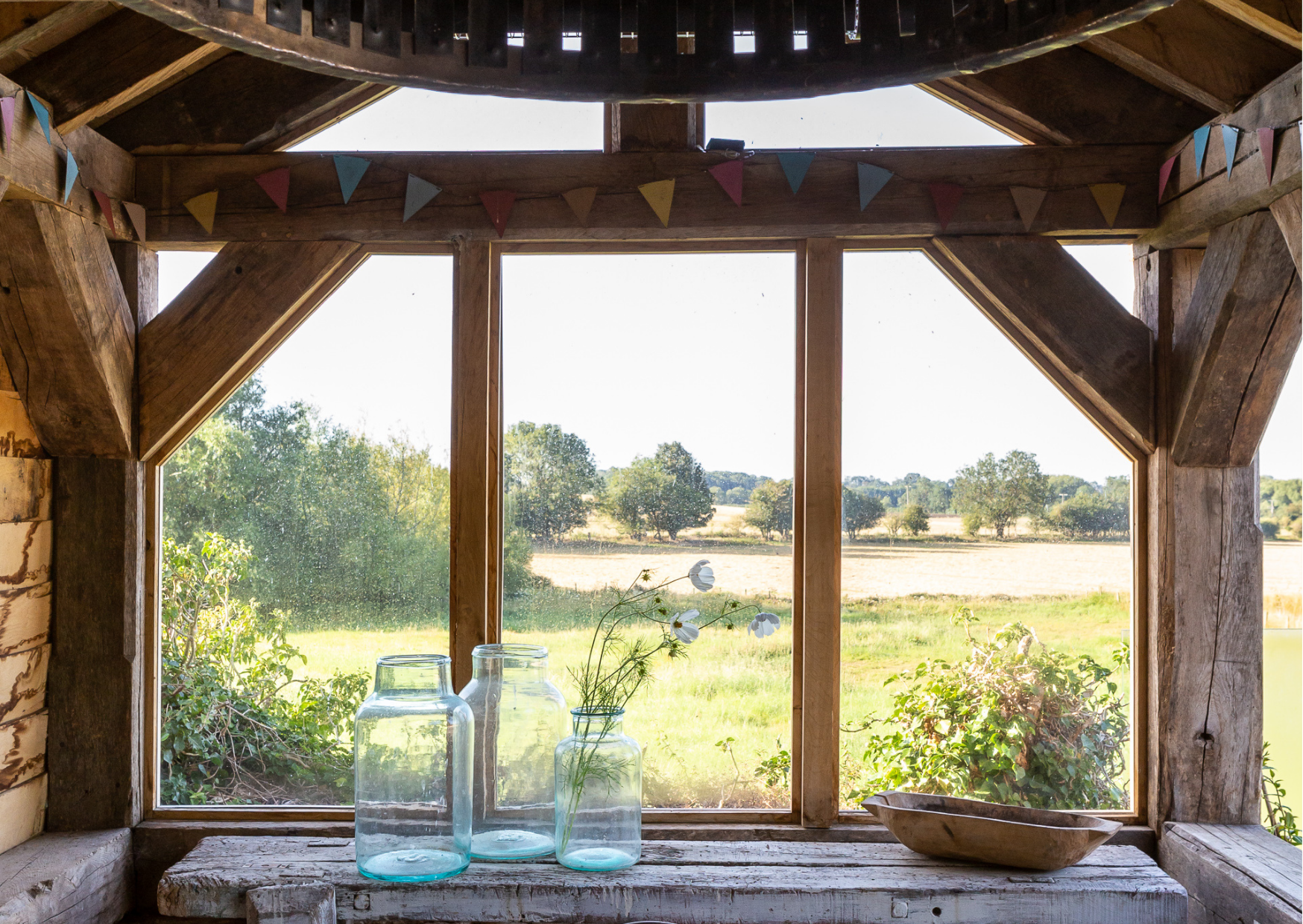
Image credit: HollandGreen
Managing Sensitive Sites
Heritage settings and ecologically rich landscapes demand precision. Landscape designers produce the technical documentation required by planning officers, including visual assessments, ecological appraisals, planting strategies, and long-term management plans.
When architecture and landscape are conceived together, proposals feel intentional rather than retrofitted. Massing, orientation, and material choices respond to the land, creating spaces that enhance wellbeing and foster a meaningful connection to the environment.
Strengthening the Planning Argument
A robust, evidence-based landscape strategy transforms a planning submission from a technical exercise into a persuasive narrative. By demonstrating ecological improvements, enhancing visual character, and ensuring the building sits harmoniously within its surroundings, landscape design provides tangible proof that a proposal respects and belongs to its setting. As Mark notes: “A well-considered landscape strategy isn’t an afterthought, it’s an essential part of the planning argument, showing that the home belongs to its place, not just occupies it.”
Developing landscape and architecture together from the outset allows potential challenges to be addressed early, ensuring solutions are embedded within the design. By the time permission is granted, every element from planting to hard landscaping works as part of a coherent and considered design scheme. The result is a home and garden designed not simply to exist, but to belong.
About HollandGreen
HollandGreen is an integrated design practice bringing architecture, interior design and landscape design together under one roof. Its landscape team works closely with architects, planners and consultants to create proposals that respond sensitively to their context, balancing visual restraint, ecological responsibility and long-term stewardship. This collaborative approach ensures that homes and landscapes are conceived holistically, strengthening planning outcomes and delivering considered, enduring environments.
get in touch
For all project enquiries, please email:
For CPD enquiries, please email:
For architecture supplier enquiries, please email:
architecture@hollandgreen.co.uk
For interior design supplier enquiries, please email:
For landscape design supplier enquiries, please email: landscapes@hollandgreen.co.uk